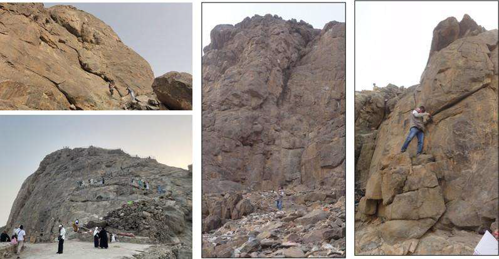


Introduction to mountain collapses and their causes:
Rock and sedimentary cuts collapse on mountain roads and higher from time to time. This is due to several factors, including seismic activity, human activity, groundwater pressure, and geological factors, which can move large rocks and accumulated sediments and thus fall on roads and residential complexes, causing many damages that constitute a real danger. There are many studies that have been conducted to evaluate the causes of rockfall and the extent of its impact (McCauely et al., 1985).
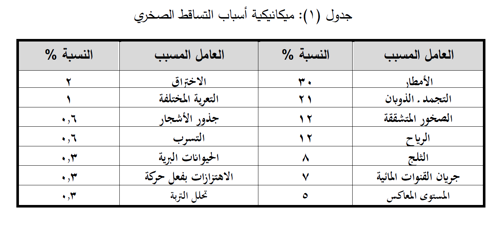
There are some studies that were conducted in many regions, and most of them were found to be due to 14 factors. Often, most of the collapsed materials can be trapped in the protection trench below the rock cut, but sometimes these collapsed materials can exceed the protection trench to reach the road and cause several damages to the roads. In addition, human injuries or deaths may occur as a result of these avalanches. What increases the risk is the design and implementation of mountain roads without taking into account the presence of a protection trench beneath the rock cut. Highways that pass through mountain slopes or obstacles are not devoid of collapses, so they often require careful studies in addition to measurements that are used in operations to control the phenomenon of mountain collapses (rock falls, sedimentary/rock slides, and sedimentary flow). And to maintain the safety of drivers. Cars require that the rock blocks on the roads be safe. The horrific fall of rocks can cause property damage and unexpected human losses, especially in crowded areas. Ensuring the stability of rock masses on mountain roads requires an evaluation of the rock structures. Usually, rockfall occurs due to the occurrence of previous rock separations, so it is necessary to recognize and identify them (Piteau 1979a, b, c, d, e). The instability of slopes, mountainous areas, and rock cuts is one of the most common geological hazards. Dangerous in the mountainous areas of the Kingdom of Saudi Arabia. There are different types of instability on slopes and rocky areas, which include avalanches. Associated with geological structures (level sliding, wedge collapse, rotational collapses, overturning collapses), in addition to the phenomena of rock falls associated with many factors and sedimentary flows that result from the flows of sediment accumulated in streams and tributaries due to water (Piteau and Martin 1982),
The phenomenon of mountain collapses is a natural phenomenon that depends on many geological, climatic, and human-induced factors. Wyllie2018.
- The presence of weak zones and faults
- Joints in rocks, especially if their angles of inclination are high and towards the road or important areas.
- Urban expansion and the subsequent change in the levels of some areas, in addition to the construction of longitudinal and transverse roads, which led to a change in the mountainous features.
- Rain and water and their effect on penetration into rocks and sediments, which leads to weakening the strength of rocks and sediments.
- The nature of rocks and the weathering processes that lead to the weakening of rocks.
- Water seepage from human activities in mountainous areas.
- Lack of good drainage of rainwater from mountainous areas